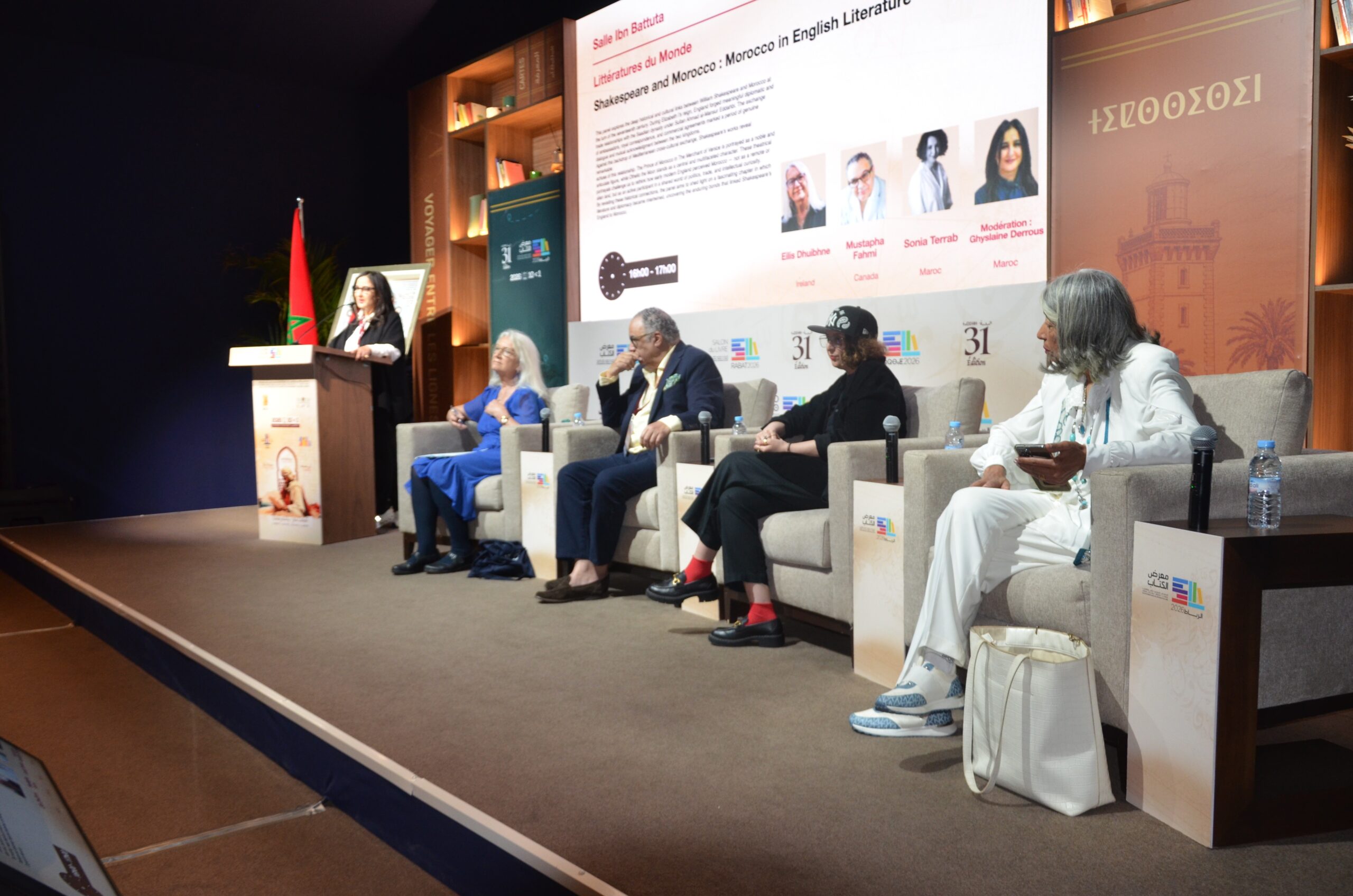
The International Publishing and Book Fair in Rabat (SIEL 2026) hosted a compelling panel discussion in Salle Ibn Battuta titled "Shakespeare and Morocco." The session focused on the representation of Morocco in seventeenth-century English literature and the historical ties that influenced the era's greatest dramatist.
The discussion featured several prominent experts from the literary and academic worlds, including Mustapha Fahmi, a Moroccan-Canadian professor of English literature and an acclaimed writer, Éilís Ní Dhuibhne, a celebrated Irish novelist and short story writer who works in both Irish and English, Hafsa Bekri, a Moroccan poet, author, and educator specializing in English, and Sonia Terrab, a Moroccan writer and filmmaker known for her cultural commentary.
William Shakespeare, widely regarded as the pre-eminent dramatist of the English language, remains a towering figure not only in the West but also across North Africa. In Morocco, his works are studied and admired for their profound exploration of the human condition.
Shakespeare’s portfolio is traditionally categorized into tragedies, comedies, and histories. These works delve into universal themes such as power, ambition, jealousy, and identity emotions that transcend time and geography.
While Shakespeare's primary focus was the English world of the late sixteenth and early seventeenth centuries, several of his works contain significant references to Morocco and North Africa. The panel discussed how these references reflected the Elizabethan fascination with the Islamic world, driven largely by the diplomatic and trade ties established with
Even though Shakespeare’s writing dates back over four centuries, his influence remains potent. Because the core characteristics of the English language have remained relatively stable, and his themes of human conflict and love continue to resonate, his work remains a vital bridge between the past and our contemporary reality.