

Journal ISIC “Le Petit Prince” in Morocco: Why this story still speaks to us ?
LINA JEBBOUR – SATURDAY, MAY 2nd, 2026
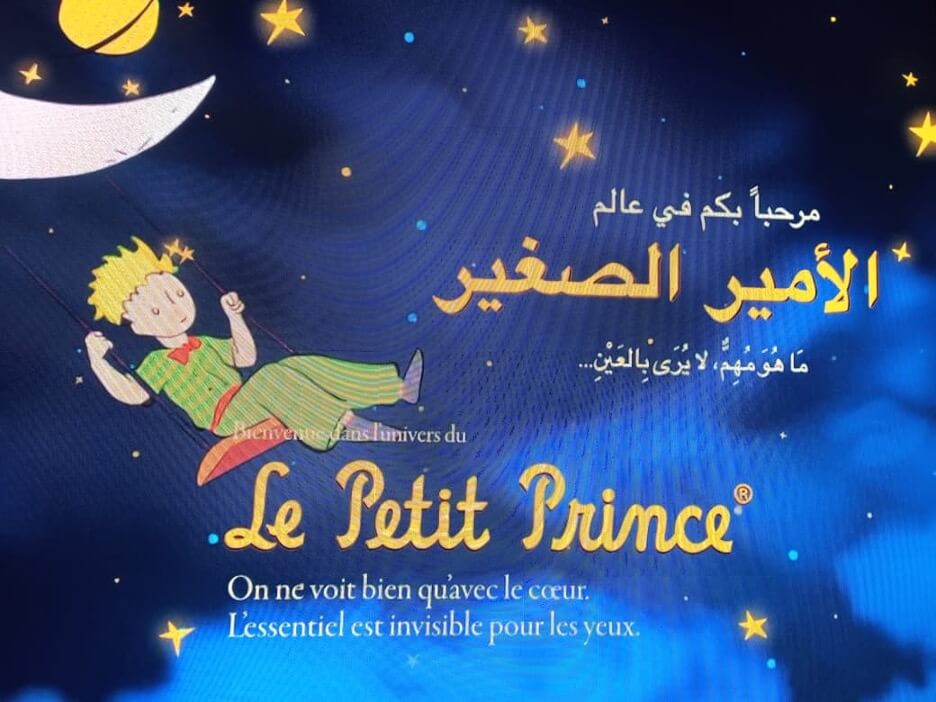
in this 31st edition of the International Publishing and Book Fair 2026, Rabat brings joy and mirth to kids and adults alike. The Fair dedicates to “The Little Prince”, commonly know as “Le Petit Prince”, a whole universe to explore and a chance to revisit the story as a classic fable. Therefore, we ought to awaken the tale’s thread.
A fable meant for kids, but embraced by adults as a way to reconnect with their youth. The Antoine de Saint Exupéry Youth Foundation (FASEJ), an institution based on the author of the fable itself, is fully committed to access to culture and the awakening of the younger generations through the book.
Moreover, the lounge dedicated to the French fable intends to bridge a symbolic dialogue between Ibn Battuta and The Litte Prince. The Book Fair also holds a celebration for the renowned Moroccan author, Ibn Battuta. After all, Ibn Battuta crossed the Sahara Desert and the pilot met the Little Prince in the same place. Both Emblematic figures of the fair were in North Africa, and now reunited in Rabat, the World Book Capital for 2026.
A story that speaks to everyone
The fable is told by a narrator who was never explicitly named. A pilot who crashed his plane in the Sahara Desert. He must fix his airplane before his supply of water ran out. Suddenly, He encountered a mysterious young boy, the Little Prince. However, instead of asking for help, the prince asks the aviator to “draw a sheep”. The pilot drew a crate and told the prince that a sheep was inside, after several failed attempts.
The prince began to talk about his home, Asteroid B-612. A planet which was threatened to be destroyed by volcanos. A demanding rose grew on his planet. Although the prince loved her, her complicated behavior made him lonely and confused which led him to leave his planet and explore the universe. Before reaching earth, the prince visited several asteroids. Each inhabited by a single adult who represents a narrow-minded trait: a geographer who writes about the world but never seen it, a businessman who counts stars thinking he owns them, a vain man who only wants to be admired…
Furthermore, on earth, the prince met a snake who said that he could return him home with a single bite. Then, he met a wild fox who told him that his rose is special because of the time he invested in her. The fox told him a truth: “It is only with the heart that one can see rightly; what is essential is invisible to the eye”.
Finally, the pilot and the prince found a well in the desert. The prince wanted to go back to his home to return to his rose. However, the prince made a deal with the snake to be bitten, and he fell in the sand. The pilot fixed his plane and left the desert. He wondered if the prince made it home safely, looking up at the stars and hearing them laugh like “five hundred million little bells.
Sparks into adulthood
The story highlights how the luminous seeds of youth seem to diminish once we reach adulthood. Adults often tend to be hopelessly short-sighed, missing out on the beauty that surrounds their everyday life. Children come to wisdom with open-mindedness and their unshakable desire to learn and explore new things. Therefore, the moral of the story is to always embrace our innocence and not to fall behind prejudices and narrow-mindedness the fox has stated it: “It is only with the heart that one can see rightly: what is essential is invisible to the eye”.