From Morocco to Spain, Amna Ellouh shone through her accomplishments and visionary literature. Born in Al Hoceima in 1926 and deceased in Tetouan in 2015, Amna Ellouh was a Moroccan journalist and writer. According to researchers, she is considered the first Moroccan woman to write a novel, Queen Khanatha, Wife of Moulay Ismaïl, as well as the first Moroccan woman to receive a literary prize in Morocco, in 1954.
As the first woman to earn a doctorate from the Complutense University of Madrid, she was a true pioneer. Whether through her novel Queen Khnatha or her writings on education, her visionary spirit remained focused on one goal: carving out a space for women in schools, literature, and public life. Revisiting her work today means returning to Moroccan roots and drawing inspiration from her journey to face the modern challenges of our time.
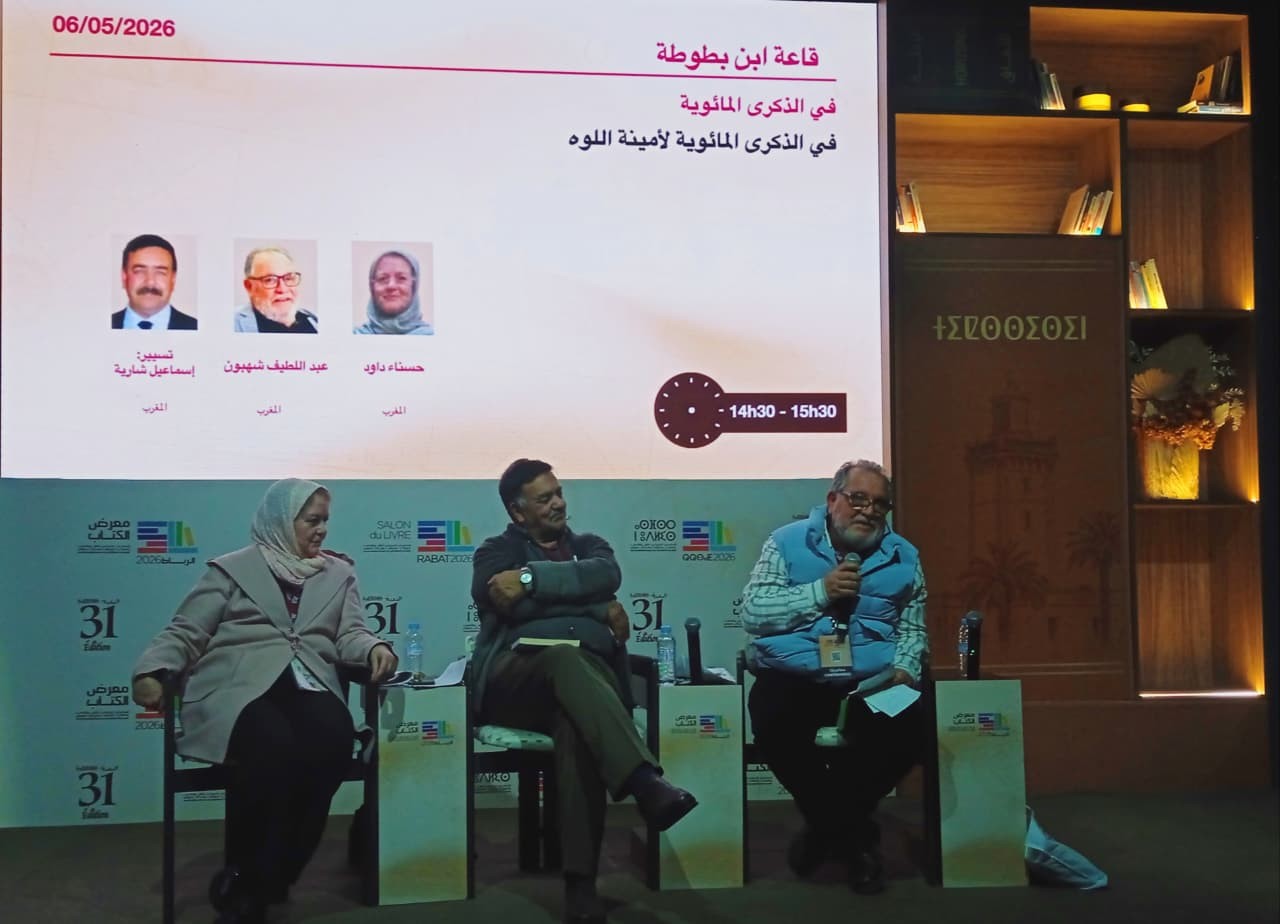
One of the guests, Abdellatif Chahboun, a Moroccan author and poet, personally interacted with Amna Ellouh on different occasions. He recalled a phone call with her during which they discussed Sufism in Islam, as well as her charitable acts, which she was not fond of revealing. She believed that her altruistic practices were virtuous deeds offered exclusively to Allah.
Furthermore, Abdellatif Chahboun exchanged written letters with Amna Ellouh. Their correspondence often touched on important themes, and he highlighted her thoughtful and critically aware style. He shared these testimonies and accounts with various newspaper outlets to keep her legacy alive.
Hasna Daoud, a professor and researcher, mentioned Amina Louh’s thesis, which she passionately defended, concerning primary education in Northern Morocco. Hasna Daoud also discussed Amna Ellouh’s various contributions to journalism, radio, and Spanish translation.