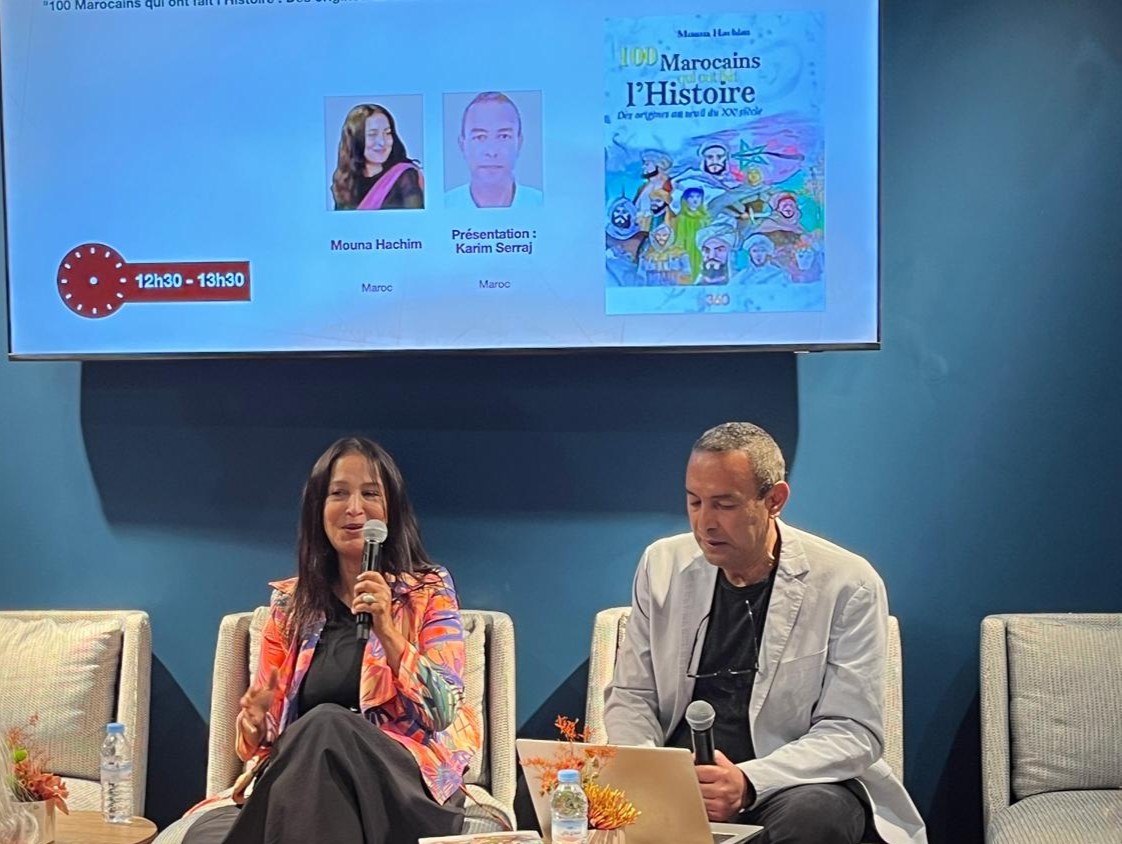
When a book reshapes Moroccan history, its release becomes more than an event. It becomes part of our shared memory. This is the case with “100 Moroccans Who Made History: From the Origins to the Dawn of the 20th Century,” the latest work by Mouna Hachim, published by Le360 Editions. The book contributes to the promotion and transmission of heritage.
A hundred faces of history
“100 Moroccans Who Made History” offers a chronological structure covering a period from Antiquity, with figures dating back to 300 BC, to the beginning of the 20th century. Through one hundred life stories, Mouna Hachim invites the reader to an “embodied reading of Moroccan history”. Each character, whether sovereign, scholar, mystic, diplomat, explorer, or woman of power or knowledge, opens a window onto a particular moment, territory, or dynamic.
Amazigh’s roots, Women voices
Among these figures, sixteen portraits of women whom are scholars, doctors, and women of power. They had occupied a prominent place in Moroccan history. This focus on women's lives is part of a broader desire to reflect the religious and cultural diversity of Morocco throughout the centuries.
For Mouna Hachim, it was necessary to bring these characters together, to have them converse with each other, because –inevitably- they can appear to live their lives separately. However, in the book, the characters converse with each other despite space and time. They show that the history of Morocco is written in many voices. It reimagines history beyond institutions, giving space to hidden figures, from Amazigh roots to women’s voices.