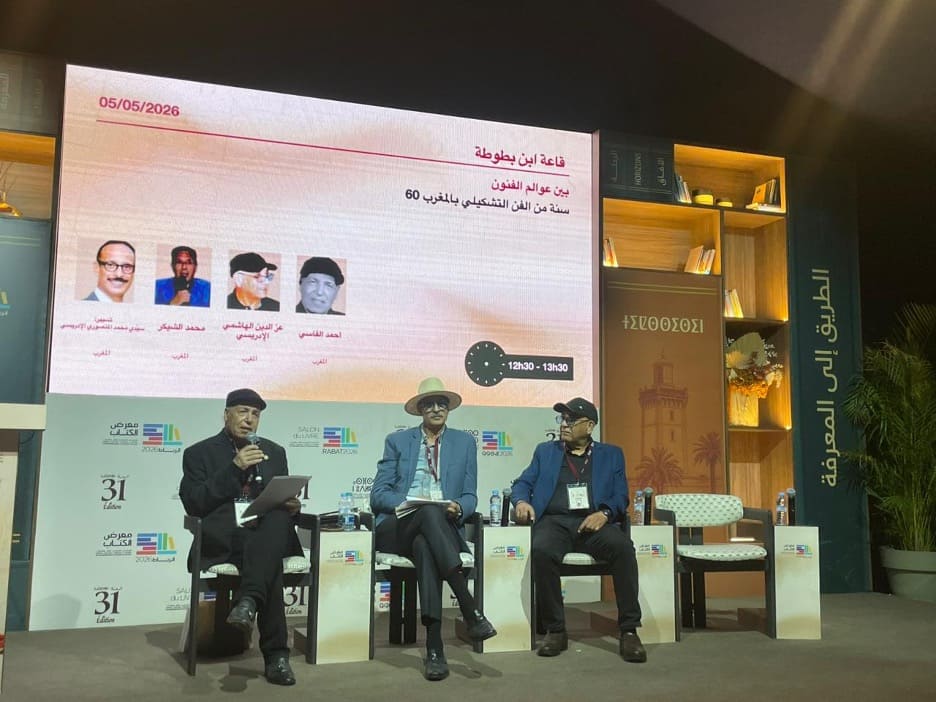
The conference explored the evolution of Moroccan visual arts over the past 60 years.
Ahmed Fassi, a researcher in visual arts, affirmed that Moroccan art is the product of a rich mix of influences, including Amazigh heritage, Arab-Islamic culture such as calligraphy, African elements, and Hassani traditions.
He talked about Moroccan artists’ search for identity after independence in order to detach from foreign artistic influence. This period helped shape modern Moroccan art and encouraged artists to create work rooted in their own culture.
Fassi explained that Moroccan artists could be divided into three categories: those focused on identity, those who combine tradition with modern styles, and those who go beyond identity. Most artists still connect their work to heritage in some way.
“The main issue is not creativity, but the lack of theory and critical work to define this school” he said. He suggested that Moroccan art should stay inspired by its roots while being open to other cultures.
Meanwhile, Azzedine El Hachimi Idrissi said that 1965 is a conceptual date when Moroccan artists became aware of their identity, and began creating art that reflects their own culture instead of following foreign styles.
He also explained that before 1965, artists worked more individually, but after this date, especially with the Casablanca group, art became collective and socially engaged. Artists started using local materials, traditional crafts, and cultural symbols to build modern Moroccan art.
“Figures like Cherkaoui and Gharbaoui helped prepare this shift, even if they worked alone,” he said. He explained that the idea of “60 years of painting” comes from a historical initiative and still has meaning today, but the discussion remains open, and different perspectives can continue to enrich the understanding of Moroccan art.