
Journal ISIC Can Art Change The World?
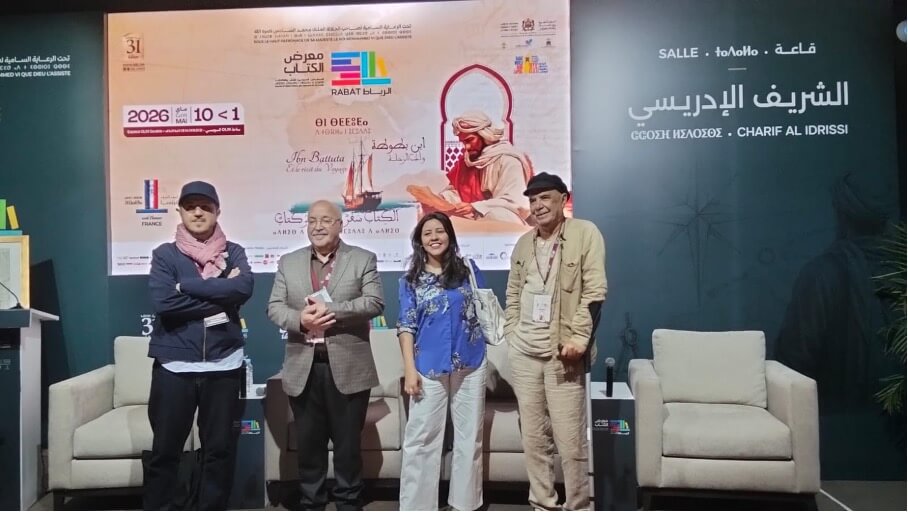
At the international book fair, a profound encounter invited us to adopt a new perspective, distinct from others, exploring identity, belonging and migration. With three artists, and visionaries sharing introspections on how we define identity across borders and artistic expression.
Hassan Bourkia, a painter and writer, whose paintings have been exhibited worldwide, gaining recognition in Morocco and abroad, hooked the audience with an introspective question: “How can we change the memory from a cemetery to a garden, allowing time to repair the ruins?”
The painter explained that Art is universal, it flows across borders, is independent from any translation and it speaks for itself, creates its own meaning and spreads its essence.
He added that “although borders constrain us, our identity lies in where we feel we belong emotionally and mentally”.
He also warned artists against the pursuit of perfection, for him it represents “the death of all creativity”, contrary to art, which lives within imperfection, liberates our imagination, and he urged them not to limit art by conventional formats.
Younes Rahmoun, a visual artist who works across different mediums, from drawings and installations to cutting-edge technologies, joined the discussion by reflecting on his journey.
As a child, he dreamed of being a wanderer, travelling the world and exploring different cultures in search of a utopia where social justice and harmony prevail. Years later, he realized that this ideal place had always been within reach, inside his home, his room, his spiritual sanctuary.
This epiphany inspired a unique art practice: since 2010, Rahmoun has carried seven stones from his hometown of Beni Mferah to countries around the globe, leaving fragments behind and bringing new ones back.
These stones, symbolic of the human heart, now connect his village to the world and the world back to his village. Through this ritual, Rahmoun illuminates the contrast between migration and rootedness, solitude and universality.
Youssra Abdelmoumen, a contemporary art specialist, interfered “borders are not just a geographical line, but political; social and physical experience where identity is negotiated”.
She evoked three artistic references; Pestelita, Europe Flag, and Frontières fluids, to emphasize how Borders are spaces of control and symbolic violence revealing contradiction between proclaimed values and a reality of exclusion
The specialist reaffirmed her belief in using visual art as a tool to address human issues, and interrogate dominant ideologies.
The experiences shared showed how identity can transcend borders, to create a universal citizenship rooted in creativity.